Loading...
Serving Miami Gardens, FL and surrounding areas. (305) 810-8732
A foundation that shifts or cracks costs far more to fix than to build correctly. We assess your lot, handle Miami-Dade permits, and install foundations that are built for South Florida's soil and weather.
Foundation installation in Miami Gardens means building a reinforced concrete slab directly on prepared ground, including site assessment, permit filing, soil compaction, forming, the pour, and a county final inspection. Most standard residential projects run three to six weeks from contract to a signed-off finished foundation.
Nearly every home in Miami Gardens sits on a slab-on-grade foundation because the area's high water table makes basements and deep footings impractical. When we talk about foundation installation here, we are almost always talking about a concrete slab poured on a carefully prepared base. For projects where the structure sits above grade or requires isolated support points, that work also ties into our slab foundation building service.
Whether you are putting up a new home, adding a permanent room, or installing a carport, the foundation work needs a permit in Miami-Dade County. We handle that process for you - from the application through every required inspection.
Diagonal cracks near door frames or windows, or cracks wider than a quarter inch, suggest the foundation may be shifting. In Miami Gardens, soft or wet soil beneath the slab can cause this kind of movement. A crack that keeps growing is worth having a professional look at right away.
When a foundation shifts, door frames and window frames shift with it. If doors that once swung freely now drag or no longer latch, that is often one of the earliest signs homeowners notice - especially after a particularly wet rainy season when saturated soil can cause ground movement.
Walk through your home and check where walls meet the ceiling and floor. Separations or gaps that were not there before can mean the structure is moving. On a home more than a few years old in Miami Gardens, new gaps appearing is a clear signal to get an assessment.
Miami Gardens gets heavy rain, and water that consistently pools right next to your home's foundation - rather than draining away - puts constant pressure on the concrete. Over time this can cause erosion, cracking, and moisture intrusion. Standing water near the foundation after storms is a signal worth acting on.
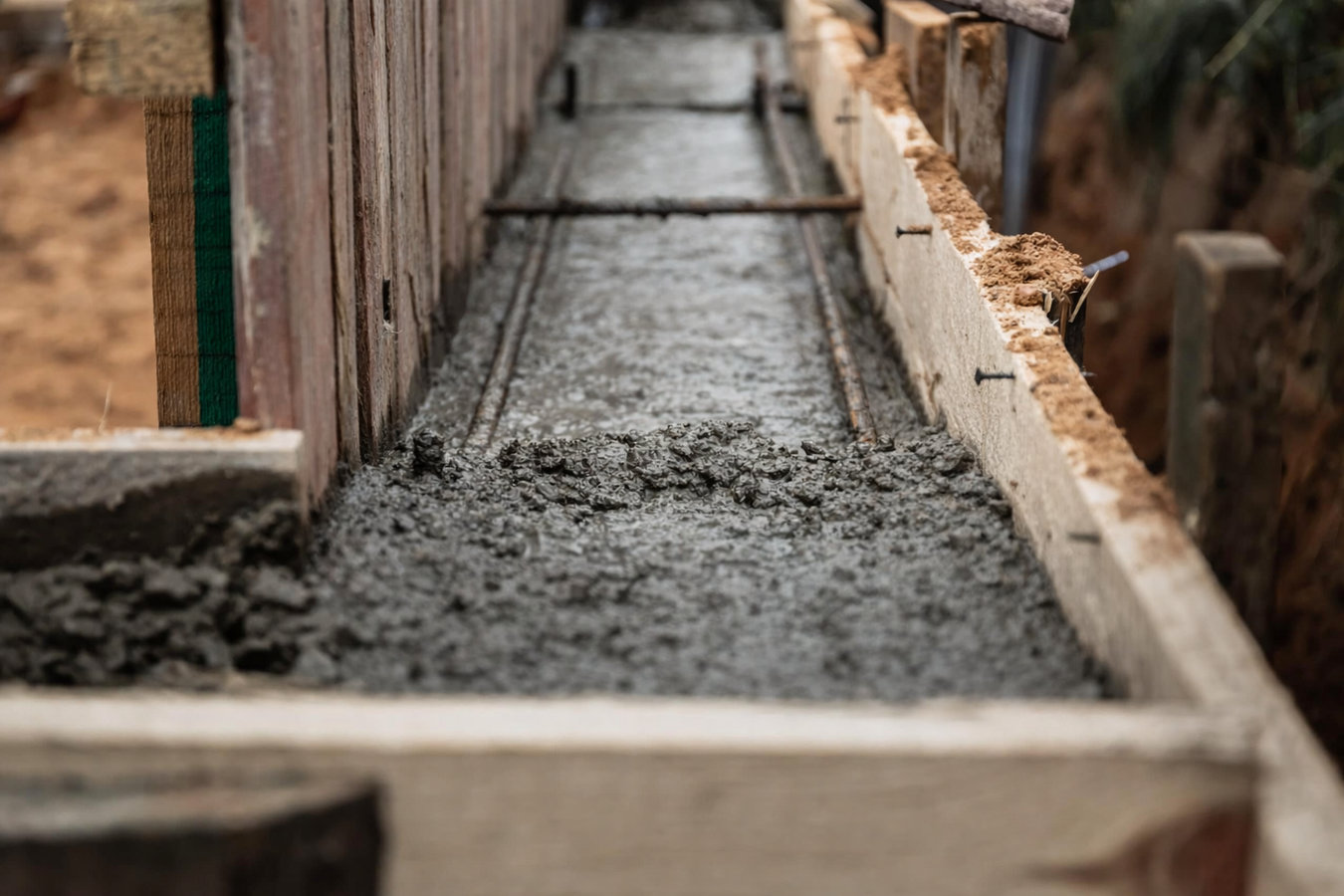
We start every foundation installation project with a site visit to assess your lot's soil conditions, drainage, and any groundwater management needs. Miami Gardens lots often have soft or clay-like soil that requires careful compaction - we document what the ground needs before we quote a price. From there we file the permit, prepare the site, set forms, place reinforcing steel, pass the pre-pour inspection, and pour. If you also need concrete parking lot building on the same property, we can often coordinate that scope under the same project to reduce mobilization costs.
After the pour we protect the surface during the curing period, schedule the county final inspection, and walk you through what was done before we consider the job complete. We also carry over those same principles to slab foundation building for new construction, so if your project spans both scopes, you have one point of contact from start to finish.
For homeowners starting a new build in Miami Gardens who need a fully permitted, inspected slab from the ground up.
For room additions, detached garages, or accessory structures that need a new foundation tied into or separate from the existing home.
For smaller permanent structures that still require a permitted concrete base to meet Miami-Dade County code.
For existing foundations showing signs of shifting, cracking, or drainage problems that need evaluation and remediation.
Most homes in Miami Gardens were built in the 1950s and 1960s on slab-on-grade foundations that are now six or seven decades old. When homeowners add on or rebuild, they are working with a mix of old soil conditions and new code requirements. The soil here - a combination of sandy layers and marl - needs thorough compaction before any concrete goes down, and contractors who rush that step are setting up problems that show up years later as uneven floors or cracked walls. Homeowners in Miramar and Pembroke Pines share similar soil and water table conditions, and we apply the same preparation standards across every project we take on in the region.
Miami-Dade County's rainy season runs roughly from June through October, with afternoon thunderstorms that can damage fresh concrete if the timing is wrong. Experienced local crews schedule pours for early morning during summer months and monitor weather forecasts closely. The county also enforces some of the strictest building codes in Florida - standards that were significantly tightened after Hurricane Andrew in 1992. A foundation built to those standards here is genuinely engineered for what South Florida delivers, not just for a standard inspection pass.
We ask for the project address and the size of what you are building, then we schedule an on-site visit. We assess your soil, drainage, and lot conditions before giving you a written quote. We reply within one business day of your inquiry.
We apply for the required building permit through Miami-Dade County. We handle the application and coordinate with the building department directly. Permit approval typically takes one to three weeks depending on current processing volumes.
Once permits are in hand, we clear and grade the site, compact the soil, and manage any groundwater if the water table is high. We set forms, place reinforcing steel, and schedule the pre-pour inspection with the county.
After the county inspector approves the setup, we pour. The crew schedules pours for early morning to avoid Miami's afternoon heat. The slab cures for at least seven days before framing loads go on. We coordinate the final inspection and walk you through completion.
We visit your lot, assess your soil, and give you a written quote with no obligation - so you can compare with confidence.
(305) 810-8732We visit your property and evaluate soil conditions, drainage, and groundwater before giving you a final number. Foundation quotes that come without a site visit are guesses. Miami-Dade lots vary significantly, and the prep work required is not the same on every job.
Every foundation installation we complete in Miami Gardens goes through the county building department with a permit and every required inspection. We file the application, schedule the inspector visits, and hand you documented sign-offs at the end. You never have to chase the permit office.
We build foundations that account for Miami Gardens' high water table, soft soil, and rainy season - not foundations designed for a drier climate. Site preparation and moisture management are not afterthoughts here. They are part of the base price.
We hold a current Florida contractor license, which you can verify at any time through the Florida Department of Business and Professional Regulation. That license requires us to carry liability insurance and workers' compensation coverage, which protects you if something goes wrong on your property.
We stand behind our work with a final walkthrough before we consider any project complete, and we put warranty terms in writing before the job starts - not after a problem appears.
Commercial and residential parking lot concrete that meets Miami-Dade County code, from site grading through the final pour.
Learn MoreNew slab foundations for homes and additions built with proper moisture barriers, reinforcing steel, and county-required inspections.
Learn MorePermit season fills up fast - reach out now to lock in your start date before the rainy season arrives and timelines get longer.