Loading...
Serving Miami Gardens, FL and surrounding areas. (305) 810-8732
Cracked slabs, moisture coming up through the floor, or a space that never got a proper concrete base - we install floors built for Miami Gardens conditions, including vapor barriers and Miami-Dade permits.
Concrete floor installation in Miami Gardens means preparing the ground, laying a gravel base and vapor barrier, pouring the slab, and finishing the surface to your spec. Most residential projects take one to two days on-site, with a curing period of about a week before the floor is ready for use.
A lot of homes in Miami Gardens were built in the 1950s and 1960s, and some still have spaces - garages, utility rooms, covered carports - that were never properly finished with a concrete slab. Others have slabs that have shifted, cracked, or were poured without moisture protection and are now causing problems. In both cases, getting the preparation right the first time matters more than almost anything else about the job.
If you are planning a floor for a garage or similar space, our garage floor concrete service covers finishing options like sealed and epoxy-coated surfaces that hold up in South Florida's heat and humidity.
Cracks about the width of a credit card edge or wider are a sign the slab has shifted or settled beyond normal aging. In Miami Gardens, sandy soil and seasonal moisture fluctuations cause cracks to appear along slab edges first. Widespread cracking usually means replacement, not patching.
A white, chalky film on your concrete floor after rain or during humid months is a sign that moisture is moving up through the slab from below. This is common in Miami Gardens because of the area's high water table. Left alone, it damages flooring installed on top and creates conditions for mold.
If part of your floor feels lower than the rest, or there is a lip where two sections meet, the ground underneath has shifted. This is a safety issue and a structural one. In South Florida's rainy season, water pooling in low spots accelerates the problem by eroding soil under the slab.
When the top layer of a floor starts peeling away in chips or develops small pits, the surface was likely finished poorly or has weathered through many heat-and-rain cycles. Miami Gardens' combination of intense sun, heavy rain, and humidity speeds up this wear. A floor in this condition cannot be patched effectively.
We pour concrete floors for garages, covered patios, utility rooms, additions, and unfinished spaces across Miami Gardens. Every pour includes ground preparation, a gravel drainage base, a vapor barrier to manage groundwater pressure from below, and reinforcement inside the slab. For finished spaces that will have tile, flooring, or an epoxy coating on top, we adjust the surface finish and thickness to suit the use. Our garage floor concrete service covers the full range of finish options for that specific space.
We also handle removal and replacement when an existing slab has shifted or deteriorated past the point of repair. Pouring new concrete over a damaged base just buries the problem, and we will tell you honestly whether your existing floor can be resurfaced or needs to come out. For outdoor surfaces connected to a new floor, our concrete pool decks service applies the same preparation principles to covered and open-air pool areas.
For unfinished spaces that have never had a concrete floor - carports, utility areas, or new additions being built out.
For existing floors that have cracked, shifted, or were poured without moisture protection and can no longer be repaired.
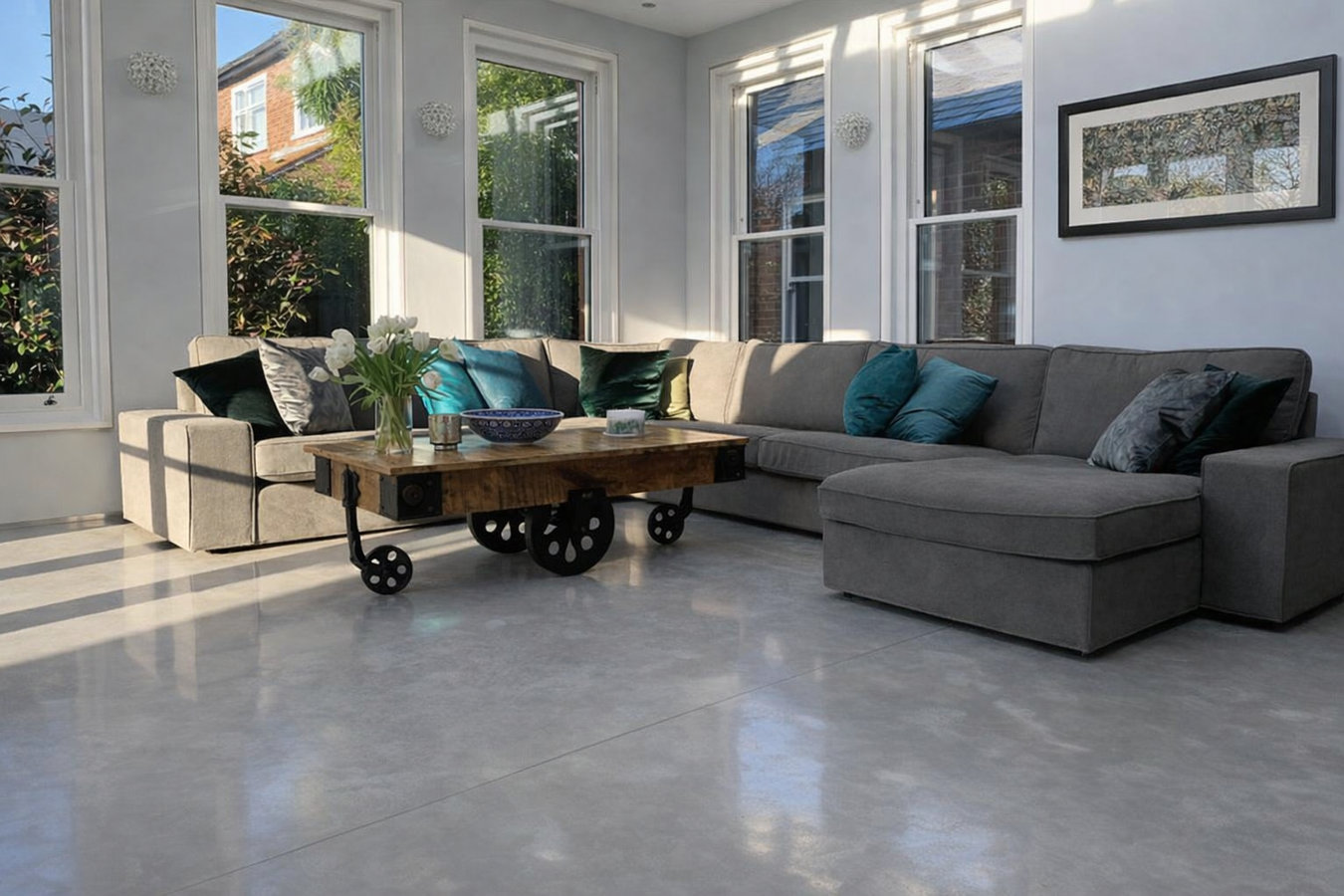
Poured to a smooth or polished finish for living spaces, workshops, or commercial areas where appearance and cleanability matter.
Graded for drainage and finished for weather exposure - suited to covered lanais, screen enclosures, and open-air slabs.
Miami Gardens has one of the highest water tables in the United States. In many neighborhoods, groundwater sits just a few feet below the surface. That means moisture pressure pushing up against a slab from below is not a theoretical risk - it is a real condition that every floor installation here has to account for. A vapor barrier is not optional on a floor built in this area, and neither is the gravel drainage layer underneath. Skipping those steps is one of the most common reasons homeowners end up with damp floors and white staining within a few years of a new pour.
Miami-Dade County also has strict permit requirements for slab work, especially for garages, additions, and covered outdoor areas. We manage the permit process from start to finish on every project where it applies. We serve homeowners throughout Miami Gardens and across nearby areas including Miami and North Miami, where the same water table and building code conditions apply.
We respond to all inquiries within one business day and schedule a free on-site visit before quoting. The condition of the ground and the existing space affect the price significantly, so we do not quote over the phone.
For most new slabs in Miami-Dade County, we pull the permit on your behalf. You will not need to visit any office. Permit approval typically takes one to two weeks, and we keep you updated so there are no surprises.
The crew excavates, compacts the soil, lays gravel and a vapor barrier, and pours the slab in one continuous session. Stopping and restarting mid-pour creates weak joints, so we plan the schedule to complete the pour in a single day.
Light foot traffic is possible after 24 to 48 hours. Vehicles and heavy furniture should stay off the slab for at least a week. Once the county inspection passes, we do a final walkthrough with you to confirm the surface is level, the finish matches what was agreed on, and the cleanup is complete.
We handle permits, moisture protection, and cleanup. No obligation - just a clear price you can compare.
(305) 810-8732Miami Gardens has one of the highest water tables in the country. We install a plastic vapor barrier on every residential slab as standard practice, not an add-on. This is what prevents damp floors, white staining, and mold under flooring two years from now.
We pull permits, manage the county inspection schedule, and give you the final approval paperwork for your records. A permitted floor is protected - if you ever sell or refinance, the work is on record and you will not face questions about unpermitted construction.
South Florida's heat causes concrete to surface-dry before it cures underneath, which is a leading cause of early cracking. We use curing compounds and wet-curing methods suited to this climate. The American Concrete Institute sets the standards for this practice, and we follow them on every job.
Your written estimate breaks down site prep, gravel base, moisture barrier, reinforcement, finishing, permits, and cleanup - so you can compare it clearly against other quotes and know exactly what you are paying for before anyone picks up a shovel.
Every floor we install is built to pass Miami-Dade County inspection the first time. That means moisture management, proper ground prep, and curing practices designed for this climate - not a checklist built for somewhere else.
Outdoor concrete surfaces around a pool or spa - poured and graded to the same moisture-management standards as any other slab.
Learn MoreGarage-specific slab work including sealed and epoxy-coated finishes that stand up to South Florida heat, humidity, and the occasional flooding from heavy rain.
Learn MoreGet your free written estimate today - permits, moisture protection, and cleanup all included, with no surprise costs when the job is done.